By Leonard Serratore | The Adventure of Lenny and Scotty
People often ask me what it felt like to step into an airplane for the first time, not as a passenger, but as someone learning to fly it.
I tell them it felt like the world got bigger and smaller at the same time.
Bigger, because the sky opened up in a way that walking around on the ground never quite reveals. Smaller, because suddenly all the things that had seemed so enormous and overwhelming, the goal of becoming an aviation professional, the years of study ahead, the sheer ambition of the dream shrank down to one manageable task: get this airplane off the ground and bring it back in one piece.
The journey to becoming a pilot is one of the most demanding and rewarding things a person can take on. It’s also one of the most misunderstood. People think it’s mostly about talent, about being naturally gifted in some mysterious way. The reality is quite different. Becoming a pilot is about persistence, preparation, and showing up every single day with the willingness to learn.
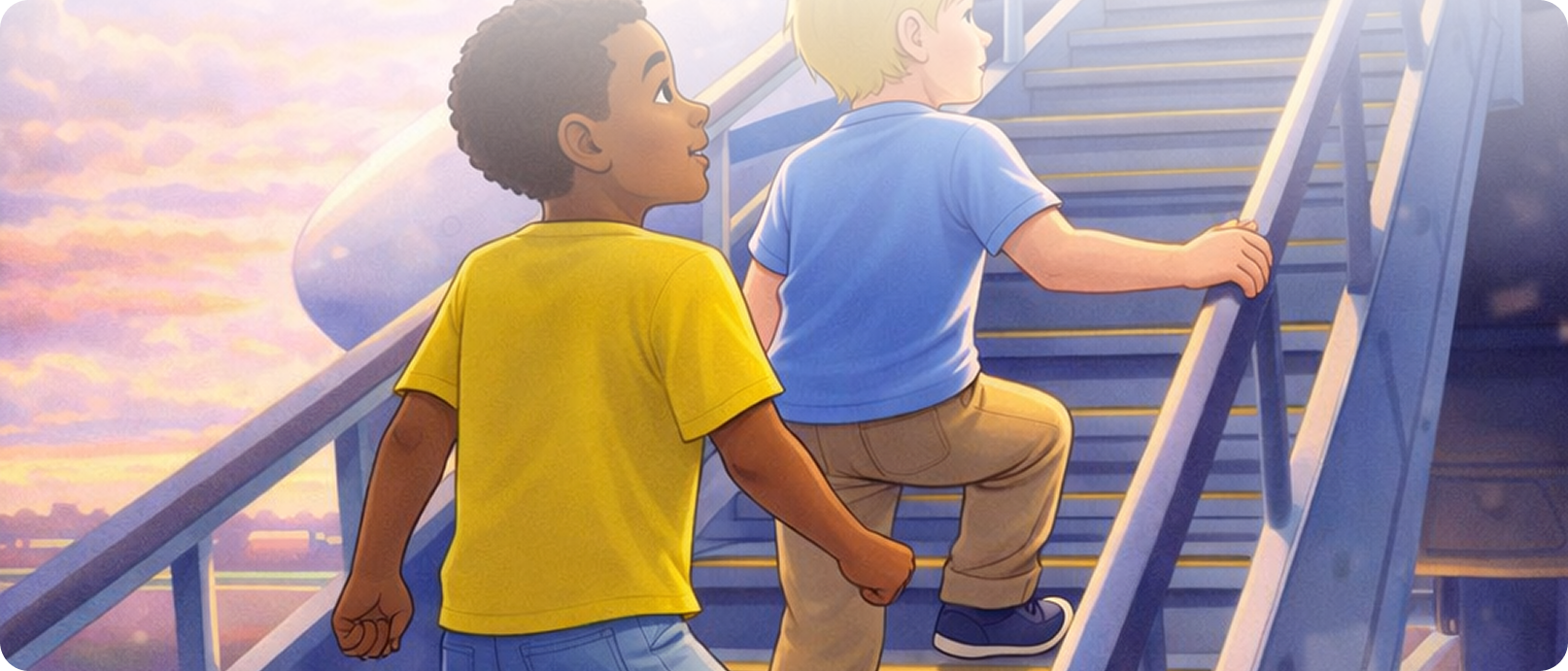
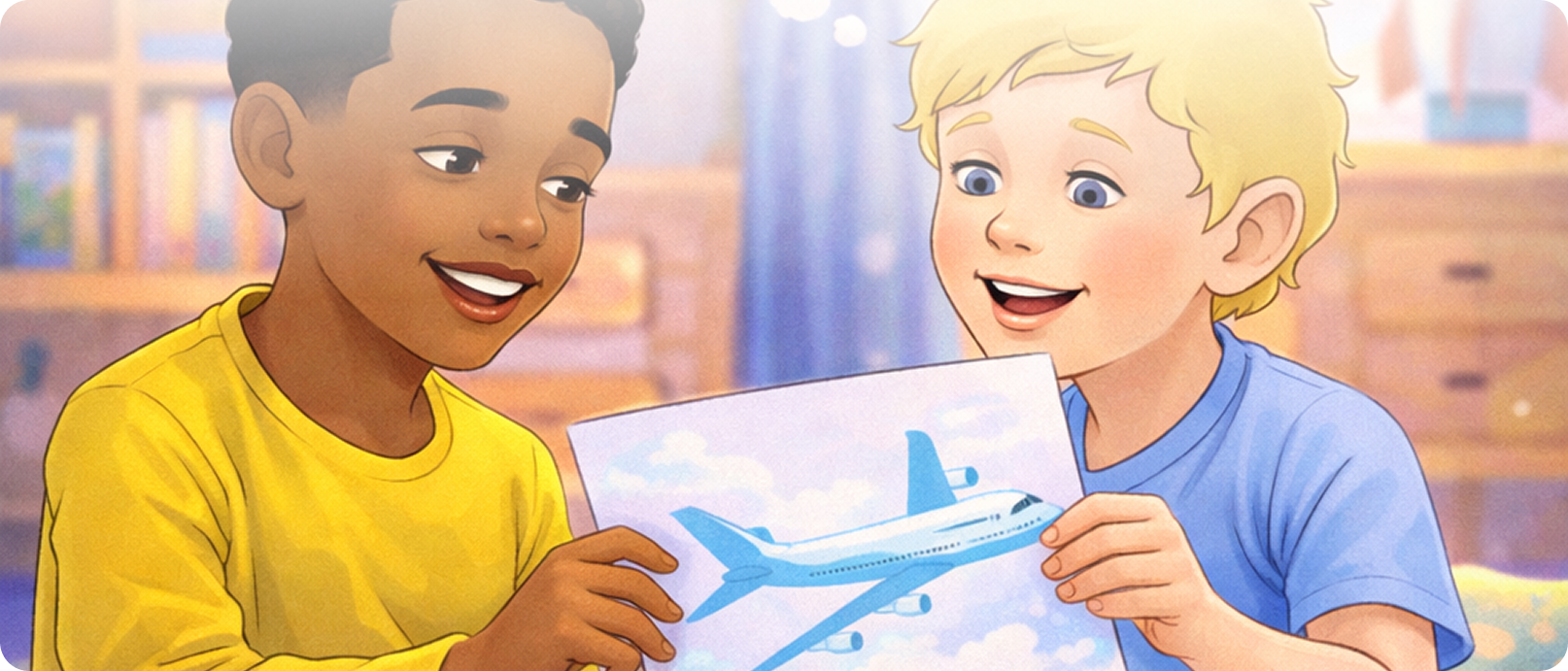
That’s the story at the heart of The Adventure of Lenny and Scotty. And it’s the story I want to share with you here.
It Starts With a Dream, and a Medical Certificate
Before a student pilot ever touches a control yoke, they need to establish that they’re medically qualified to fly. Aviation medicine is a real specialty, and the Federal Aviation Administration (FAA) requires pilots to hold a valid medical certificate before they can fly solo.
For most aspiring pilots, this means visiting an FAA-designated Aviation Medical Examiner, a doctor trained to assess pilot fitness. The exam covers vision, hearing, cardiovascular health, neurological function, and other factors that could affect a pilot’s ability to fly safely. It’s thorough, but for the vast majority of young, healthy people, it’s also very passable.
This step matters more than people realize. Aviation is one of the few careers where your physical health is formally evaluated and certified. It reflects the seriousness with which the field takes the responsibility of carrying passengers, and the responsibility pilots have to themselves.
Ground School: Learning Before You Fly
Here’s something that surprises a lot of people: you spend a significant portion of pilot training not in an airplane at all. You spend it in a classroom, or in today’s world, increasingly, in front of a computer screen.
Ground school covers the theoretical foundations of flight: aerodynamics, aircraft systems, weather patterns, navigation, airspace regulations, radio communication, and emergency procedures. It’s where the why behind everything comes into focus.
The FAA Private Pilot written exam, the knowledge test you must pass before you can take your practical checkride, covers all of this material and more. Preparing for that exam takes real study. Most students spend 40 to 60 hours in ground school before they’re ready.
Some students find the ground school portion frustrating because they want to fly, not sit in a room talking about flying. I understand that feeling completely. When I was young and in love with the sky, the last thing I wanted was to slow down and study. But here’s what I learned: the pilots who are most comfortable in the cockpit are the ones who did the intellectual work first. When something unexpected happens at altitude, the pilots who have prepared academically don’t have to stop and think; the knowledge is already there, waiting.
Flight Instruction: Dual Hours and Solo Hours
Actual flight training is divided into two types of hours: dual (flying with a certified flight instructor in the cockpit) and solo (flying alone).
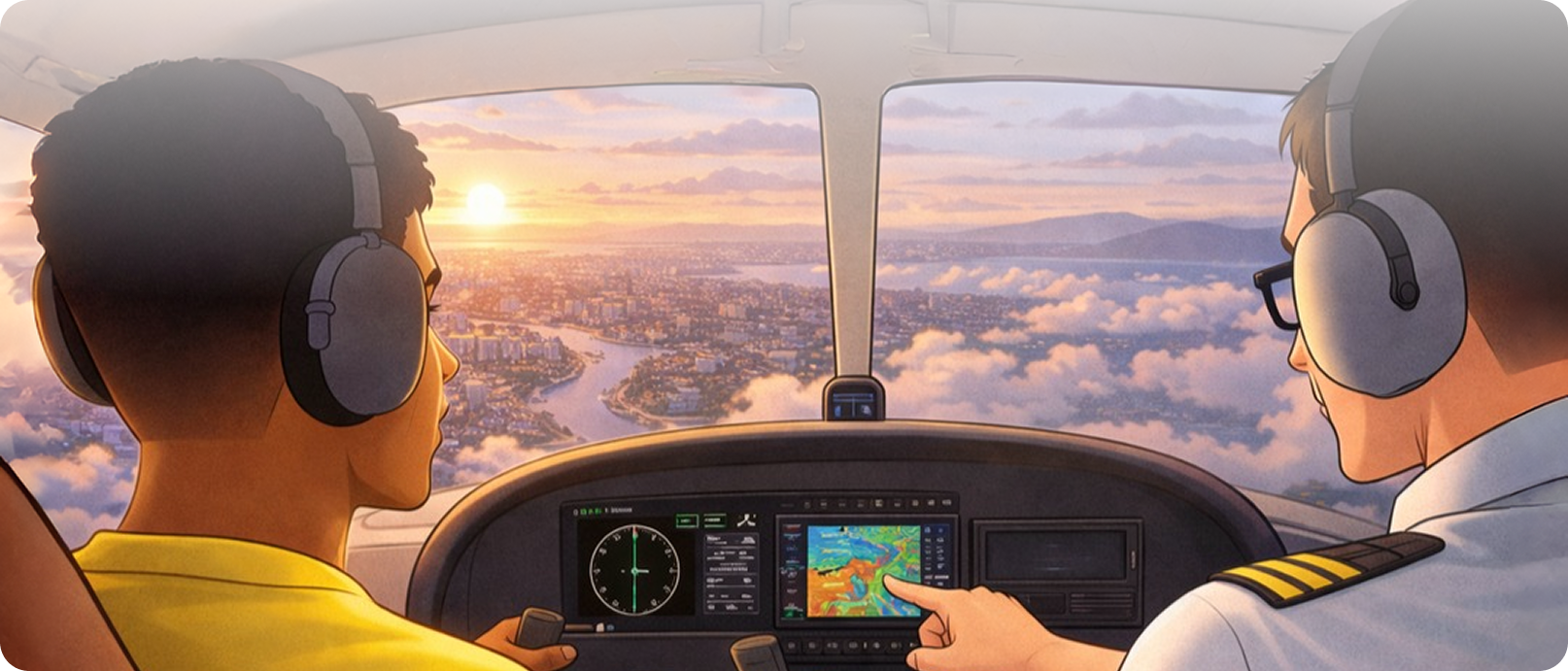
Dual training is where students learn the physical skills of flight, how to take off, how to land, how to handle turbulence, how to navigate, and how to respond if the engine fails. A good flight instructor is part teacher, part coach, and part safety officer. They let you make mistakes within carefully managed limits, because mistakes are how you learn. But they’re always there, ready to take control if a situation gets beyond the student’s current abilities.
The first solo flight is one of the defining moments in every pilot’s life. There’s a tradition at many flight schools: after your first solo, your instructor cuts the back of your shirt off. It’s a rite of passage, a physical marker of the moment the student became someone the instructor trusted to fly alone.
I have heard pilots describe their first solo in hundreds of different ways over the years. Some talk about the strange silence of the cockpit when the instructor isn’t there. Some talk about the clarity, that suddenly every decision is yours and yours alone. Some just say it felt like freedom they’d never experienced before.
Scotty and Lenny both reach this moment in the book. The way each of them experiences it is different, as it is for every pilot. But both of them understand, in that cockpit alone, that everything they ever dreamed is possible.
The Private Pilot Certificate: Your First Wings
The Private Pilot Certificate (often called a “Private Pilot License” or PPL, though technically the FAA issues certificates, not licenses) is the first full milestone in a pilot’s career. To earn it, a student must complete a minimum of 40 flight hours, at least 20 of which are with an instructor and at least 10 of which are solo. They must pass the written knowledge exam, and they must pass the practical checkride: a flight test conducted by an FAA examiner or a Designated Pilot Examiner.
The checkride is the real test. It includes an oral portion where the examiner tests your theoretical knowledge, followed by a flight portion where you demonstrate your skills in real conditions. You might be asked to fly specific maneuvers, navigate to a nearby airport, or demonstrate emergency procedures.
Passing the checkride doesn’t mean you’re a perfect pilot. It means you’ve reached a minimum standard of competence that allows you to fly safely. Real mastery comes with the thousands of hours that follow.
But holding that certificate for the first time? That’s something else entirely.
Beyond the Private Certificate
A Private Pilot Certificate lets you fly yourself and your friends and family. But if you want to fly for hire, as a commercial airline pilot, a charter pilot, a crop duster, or a flight instructor, you need to keep going.
The Instrument Rating comes next for most pilots, qualifying them to fly in low visibility and instrument conditions. Then the Commercial Pilot Certificate, which allows you to be compensated for flying. Then, for those heading to the airlines, the Airline Transport Pilot (ATP) certificate is the highest level of pilot certification, requiring 1,500 flight hours and a rigorous test.
The journey from student pilot to ATP can take anywhere from two years to a decade, depending on how quickly someone can accumulate hours and complete training. It requires financial investment, emotional persistence, and an unshakeable commitment to the goal.
It’s not easy. I won’t pretend it is. But neither is anything worth doing.
The Moment That Makes It Worth It
I’ve been asked many times whether I ever regretted choosing a life in aviation. The honest answer is no, not for a single day.
The sky rewards people who are willing to work for it. It doesn’t care about your background or where you grew up or what challenges you’ve faced along the way. It cares about preparation. It cares about discipline. It cares about showing up.
Scotty and Lenny didn’t become pilots because it was easy. They become pilots because they refused to let it be hard enough to stop them.
That’s the journey. That’s what it really takes to earn your wings. And trust me, the view from up there makes every hour of study, every early morning flight, every difficult checkride worth everything you gave to get there.